

Table of Contents
In the times of evaluating the best CPU for commercial machine learning in 2026, the aim is scalability, performance, as well as reliability under heavier and sustained workloads.
The commercial ML differentiates from the personal or hobbyist usage by managing the bigger datasets, further complicated models, the multi-user environments, as well as the integration along the clusters, servers, or even the edge deployment systems.
Unlike the casual GPU-centric training on any laptop, commercial workloads require CPUs with higher core/thread counts, larger on-die caches, and abundant PCIe lanes for GPU/accelerator connectivity, as well as robust memory support and stronger I/O.
The basic deciding factors involve the number of how many simultaneous processes you will run, the data throughput, compatibility with the accelerators (GPUs/TPUs), as well as whether the tasks are training, inference, or they are data preprocessing.
Why CPU Performance Matters in Commercial Machine Learning
To answer the question of why CPU performance matters in machine learning. It is crucial to understand that the performance of the CPU is very crucial in commercial machine learning due to the fact that the CPU manages far more than just launching the training jobs.
Multiple of the data processing, as well as feature engineering, including the cleaning, transforming, as well as loading the larger datasets, runs initially on the CPU before the data is even reached by the GPU. The weaker APU can also become the bottleneck, leaving the costly GPUs underused.
The higher performance of the CPU also guarantees the efficient feeding of the GPU, allowing quicker data pipelines as well as decreasing the idle time when training.
The commercial ML workloads highly depend on parallel processing, where several cores regulate the concurrent tasks like data loading, logging, augmentation, as well as model orchestration.
For the real-time inference as well as the batch processing, the CPUs should deliver the consistent performance that is low-latency, specifically in the production systems.
In the enterprise, along with the multi-user environments, stronger CPUs permit multiple models, users, as well as services to operate simultaneously in the absence of performance degradation, making them important for scalable as well as reliable ML operations.
You May Like This: VGA Port vs Serial Port: What’s the Difference?
CPU vs GPU Machine Learning – What Really Matters?
Well, the CPU vs GPU for machine learning debate is not about selecting one over the other; it is about totally acknowledging their roles.
Therefore, the CPU becomes the bottleneck in the time of handling the data preprocessing, feature engineering, data loading, as well as coordinating the several training jobs.
If the CPU can not prepare alongside feeding the data fast enough, GPUs sit idle, wasting the performance as well as money.
The GPUs do most of the heavy lifting in the time of model training as well as larger-scale inference, excelling at matrix operations as well as parallel computation.
Although commercial ML still needs a very powerful CPU to manage the pipelines, memory, networking, storage, as well as multi-user workloads.
The greatest approach is a very balanced system, pairing the higher-performance CPUs with the capable GPUs to expel the bottlenecks, increase the throughput, as well as guarantee reliable, scalable machine learning in production environments.
Key CPU Features for Commercial Machine Learning
Selecting the best microprocessor machine learning needs to focus on the features that directly affect the scalability, performance, as well as reliability in production environments.
Core Count vs Clock Speed
Well, the high core counts are very important for the parallel workloads, such as data preprocessing, orchestration, as well as the multi-user tasks.
At a time when the strong clock speeds enhance single-threaded operations like scheduling as well as inference control. The Commercial ML advantages most from the balance of both of them.
Cache Size & Memory Bandwidth
The larger L3 cache decreases the data access latency, while the high memory bandwidth guarantees further fast movement of the complex datasets. It is critical for the training pipelines as well as real-time inference.
PCIe Lanes (Critical for Multi-GPU Systems)
The more PCIe lanes permit several GPUs, NVMe drives, as well as accelerators to run at their full speed without bottlenecks, which is very important in enterprise ML servers.
AVX / AVX-512 & Vector Instructions
The advanced vector instructions also accelerate the math-heavy workloads, boosting the performance in data preprocessing, inference, and alongside the CPU-based ML tasks.
Memory Channels & ECC Support
Several memory channels enhance the throughput, while the ECC memory guarantees the data integrity, non-negotiable for commercial as well as mission-critical ML data preprocessing CPU systems.
Power Efficiency & Thermal Stability
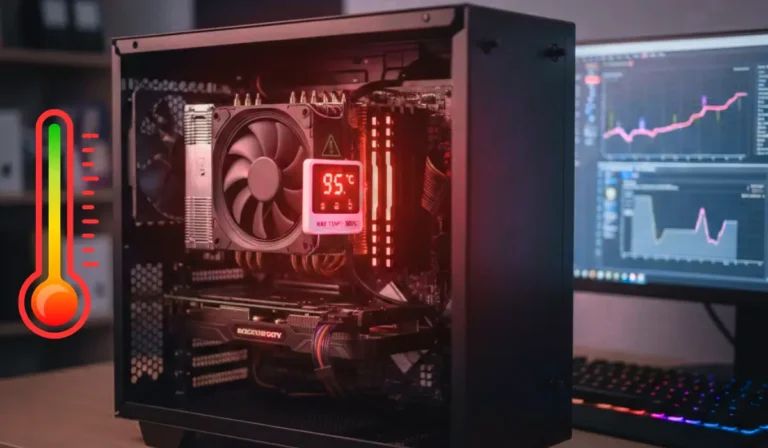
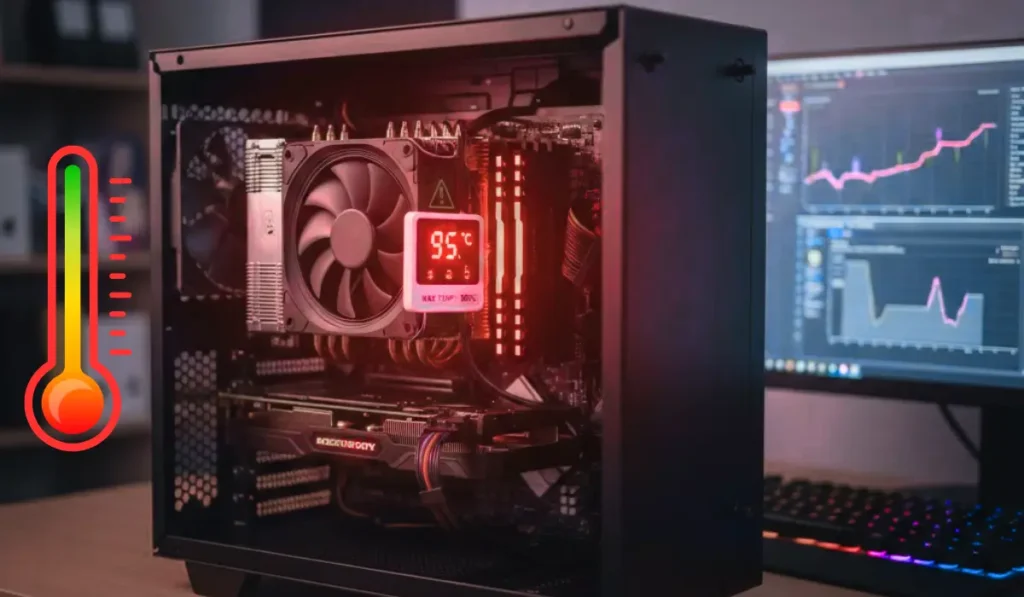
Then efficient CPUs regulate the sustained performance under the constant load, decreasing the throttling, cooling costs, as well as downtime in the 24/7 production environments.
You May Like This: How to Check Motherboard Damage from the GPU?
Best CPUs for Commercial Machine Learning (2026 Picks)
Here is a calculated list of the best CPUs powering commercial machine learning in 2026, from the enterprise-grade server chips to the workstation, as well as value-oriented choices.
Best Overall CPU for Commercial Machine Learning
AMD EPYC & Intel Xeon Platinum
Why is it best: The Enterprise CPUs, such as the AMD EPYC and the Intel Xeon Platinum, dominate the larger-scale ML workloads thanks to the huge core counts, massive cache sizes, multi-socket scalability, and robust PCIe/CCIX/CXL assistance, as well as the complex memory channels.
All of these features allow accelerated training, inference clusters, high-throughput data pipelines, along multi-tenant use in server environments.
Ideal Workloads:
- It has a distributed model training
- Also has enterprise inference serving
- Also, does the Data preprocessing at scale
Pros:
- It consists of extreme performance as well as scalability
Cons:
- Enterprise reliability and redundancy, high power draw, along with the higher cost
Best Machine Learning Workstation CPU
AMD Threadripper PRO/Intel Xeon W
Why is it best: The workstation-class CPUs like the AMD Threadripper PRO or the Intel Xeon W strike the balance among the core count, PCIe lanes, as well as the single-threaded performance.
Great for the AI startups, along with the data teams that require the power without complete server complexity.
The Threadripper PRO chips often provide up to about ~96 cores, 192 threads, as well as the extensive PCIe Gen 5 lanes, also making them great for multi-GPU setups as well as heavy multitasking.
- Multi-GPU support: High PCIe lane counts guarantee that the GPUs run at full bandwidth and are important if you are training models on several accelerators.
- Performance vs cost: The Workstations offer the near-server computer even without the premium enterprise pricing, though still very costly for the top SKUs.
Best Value CPU for Commercial ML
High Core Count Consumer CPUs (e.g., AMD Ryzen 9/Intel Core Ultra)
Many users might ask What is the best CPU for machine learning?
For the teams that are on tighter budgets, the high-end consumer CPUs, along with the stronger multithreading, such as the AMD Ryzen 9 9950X3D, deliver great cost-to-performance ratios. It can also assist the lighter commercial ML workloads.
Cost-performance balance:
All of these CPUs provide great core counts, high clocks, as well as larger caches at a fraction of enterprise pricing.
Limitations vs enterprise CPUs:
- It has limited PCIe lanes as compared to the server/workstation parts
- It has fewer memory channels as well as ECC support
- It is not great for scaling beyond 1 to 2 GPUs
Best CPU for Data Preprocessing & Feature Engineering
For tasks such as data cleaning, transformation, as well as feature extraction, the CPUs with the higher clock speeds, ample L3 cache, along efficient multithreading outperform the sheer core count. Instances involve:
- AMD Ryzen 9 9950X3D: big cache, as well as the stronger single-threaded performance, helps with the data prep.
- The high-end Intel Core Ultra series, stronger IPC, as well as the memory subsystem assist with the mixed workloads.
Ryzen vs Intel for Machine Learning
Multiple users ask questions like “Is Ryzen 7 better than i7 for machine learning?” For most of the ML workloads, yes, the Ryzen often performs better, specifically for the price.
Ryzen Advantages:
- Further cores as well as threads at familiar prices
- Greater cache (ideal for the data-heavy tasks)
- Great value for the preprocessing as well as the parallel workloads
Intel Advantages:
- Provides strong single-core performance
- Further support for the AVX as well as the Intel-optimized ML tools
- Very stable ecosystem for some of the inference workloads
When Ryzen wins: data preprocessing, feature engineering, as well as multitasking
When Intel is better: single-threaded tasks, and also Intel-optimized inference
Verdict: For most of the machine learning users, the Ryzen provides further better overall value along with performance, in the times of Intel suits, particularly optimized for the single-core-heavy workloads.
You May Like This: How Many USB Ports Does My Motherboard Have?
Consumer vs Workstation vs Server CPUs for ML
Consumer (Desktop) CPUs are very affordable as well as very suitable for entry-level or small-scale ML. But they have clear restrictions as well as limitations.
They provide some cores, limited PCIe lanes, and some memory channels, as well as they might also lack ECC support, making them very unreliable for continuous commercial workloads or multi-GPU setups.
The Workstation CPUs fill the gap. They offer higher core counts, further PCIe lanes, ECC memory assistance, as well as stronger single-core performance.
This makes them great for the AI startups, data teams, along on-prem ML workstations operating several GPUs.
Server CPUs are structured for scale as well as uptime. With the huge core counts, multi-socket support, extensive memory capacity, as well as enterprise reliability, they power the larger ML clusters along with the production systems.
The Decision Guide:
- Smaller teams → the Consumer CPUs
- The growing ML teams → the Workstation CPUs
- Enterprise and scaling → the server CPUs
Benchmarks That Matter for Machine Learning CPUs
Not all of the benchmarks exhibit the real machine learning performance. The key to this is to understand which of the benchmarks actually matter for the ML workloads.
Cinebench multicore is very useful for measuring the sustained performance of the multi-threaded CPU.
In the time when it does not test the ML directly, it closely exhibits how well the CPU manages parallel tasks such as data preprocessing, feature engineering, as well as the multi-process training pipelines.
The Geekbench ML aims at machine-learning–specific operations. It also offers insight into the CPU performance for inference, along with the lightweight ML tasks.
It is particularly helpful for comparing the CPUs when the GPUs are not the primary bottleneck.
The TensorFlow and PyTorch preprocessing benchmarks are considered the most essential.
They show how rapidly the CPU can load, transform, and then feed the data to GPUs, which is often the real performance limiter in the commercial ML systems.
Finally, the I/O and memory benchmarks (disk throughput, memory bandwidth, and latency) matter due to the fact that ML workloads move complex datasets.
Stronger I/O and the memory performance prevent the GPU starvation, alongside which guarantees smooth and scalable ML pipelines.
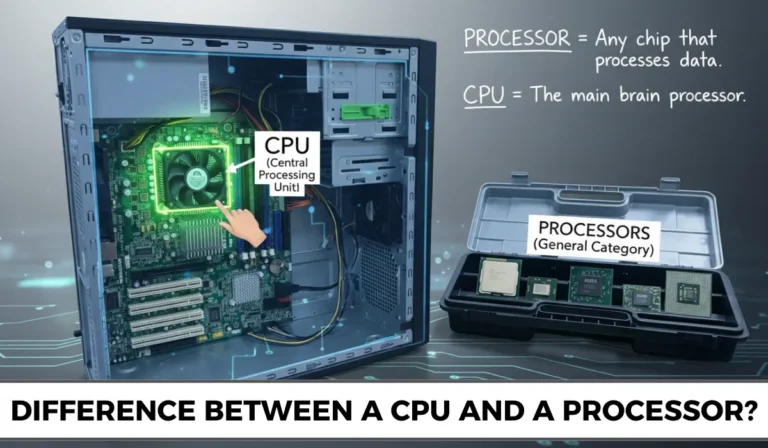
Well, if you want further knowledge about CPUs or their differences with processors, you can also visit What is the difference between CPU and processor?
Future CPU Trends in Machine Learning
The future of CPUs in machine learning is moving in the direction of specialized AI acceleration as well as efficiency.
One fundamental and important trend is the integration of the NPUs (Neural Processing Units) directly inside the CPUs, allowing quicker on-chip inference without depending solely on the GPUs.
Likely, the AI accelerators within the CPUs are becoming further common, optimizing the matrix as well as vector operations crucial for ML workloads.
The ARM-based CPUs are gaining traction in ML, providing higher efficiency, lower power consumption, as well as raising assistance for the ML foundations.
These chips are specifically appealing for the edge device as well as energy-conscious deployments.
Well, over the next 2 to 3 years, expect the CPUs to unite the traditional cores along with the AI-focused accelerators.
Expand the memory bandwidth, as well as enhance the multi-GPU and multi-node support, making the commercial ML systems quicker, more efficient, along easier to scale.
You May Like This: Faulty Motherboard Symptoms: Diagnose & Fix Fast
How to Choose the Best CPU for Your Commercial ML Workload
When choosing any CPU for commercial machine learning, always remember the following major factors:
- Training vs inference: Training favors the higher core counts as well as multi-threading, whereas inference might depend more on the single-core speed.
- Dataset size: Larger datasets need more memory channels, cache, as well as bandwidth.
- GPU count: More GPUs require additional PCIe lanes along with quicker I/O to avoid bottlenecks.
- Budget: Balance the price against the performance; enterprise CPUs provide the maximum power, but the consumer/workstation CPUs can offer value for minor teams.
- The scalability requirements: The strategy for future growth, the multi-user environments, or the cluster expansion.
Final Verdict
For the commercial machine learning in 2026, server CPUs such as the AMD EPYC or the Intel Xeon Platinum are the greatest overall selection for the larger-scale training, along with the production systems.
Moreover, the Workstation CPUs like the Threadripper PRO or the Xeon W suit the AI startups as well as data teams requiring the multi-GPU power without the full server complexity.
The higher-end consumer CPUs provide the greatest value for the smaller teams, prototyping, as well as the preprocessing-focused workloads.
FAQ’s
Do CPUs matter for machine learning?
Yes. The CPUs manage the data preprocessing, feature engineering, task scheduling, as well as feeding data to GPUs. The weaker CPU can bottleneck the overall ML pipeline.
Is a high-core CPU better than a high clock speed for ML?
In several cases, yes. The high core counts benefit the parallel workloads, such as the data loading as well as preprocessing, in times when the high clock speeds assist the single-threaded tasks along with the inference control.
Can you run commercial ML on a consumer CPU?
Yes, for small to medium workloads. The consumer CPUs work for prototyping along with the light commercial ML, but also lack the scalability, PCIe lanes, as well as reliability for the larger deployments.
How much CPU power is enough for ML?
It relies on the workload size as well as the GPU count. More GPUs, along with the larger datasets, need higher core counts, further memory bandwidth, as well as additional PCIe lanes.
What CPU works best with multiple GPUs?
Workstation as well as the server CPUs like the Threadripper PRO, AMD EPYC, or the Intel Xeon work great due to the fact that they provide multiple PCIe lanes as well as strong multi-threaded performance.